
What is an Overlay District?
An Overlay District is a zoning tool that applies an additional layer of standards on top of existing regulations in a specific area.
Communities adopt overlay districts for a variety of reasons. Overlay districts may be appropriate in areas where historic preservation is needed, where there is the need to balance commercial development with the need to preserve surrounding neighborhoods, to maintain community character, for infrastructure or environmental protection, or to accomplish policy objectives. Overlay districts can also be used to prohibit uses that are incompatible with the surrounding area.
In Wichita, overlay districts have been created to preserve the historic and architectural character of Old Town and Delano. Design standards regulate the appearance of new construction and building renovations in these areas.
What are Design Standards?
Design standards are design requirements that are mandatory for any new project. Design standards are adopted to ensure that development within an overlay district achieves a minimum quality of design. Design standards establish a baseline that all new projects must adhere to.
What are Design Guidelines?
Design guidelines are recommendations that elevate the design of a project above and beyond the minimum requirements of the design standards. Guidelines are voluntary for property owners to follow. Design guidelines might be useful for educating property owners who wish to restore a historically sensitive property or ensure the highest level of compatibility with the surrounding neighborhood.
Why Adopt Design Standards?
During the development of the College Hill Neighborhood Plan, neighborhood residents and business owners expressed a strong desire to preserve the neighborhood character that makes College Hill unique. Minimizing land use conflicts and strengthening College Hill’s identity were also key themes repeated in the community engagement process. Design standards can help accomplish these goals.
Design Standards are a tool that can:
- Preserve the architectural character of College Hill
- Help ensure compatibility between new development and neighboring properties by minimizing land use conflicts
- Make development more predictable – developers and neighbors alike know expectations upfront
- Protect property values
- Enhance walkability
- Promote vibrant, people-centered commercial districts
What is the Difference Between Design Standards and a Homeowners Association (HOA)?
Design standards are adopted to establish architectural standards for buildings and structures within the boundaries of an overlay. HOAs can also create design standards for an area. HOAs also establish codes for property maintenance that extend to yards as well as residential structures.
Elements that are commonly regulated by Design Standards
- Site layout and building placement
- Architectural form
- Building materials
- Signage
Elements that are NOT regulated by Design Standards, but could be subject to HOA regulations:
- Paint colors
- Landscaping (lawn height, flowers, trees, native plants, vegetable gardens, mulch, etc.)
- Decorative elements such as shutters, flower boxes, flag poles, etc.
- Fencing
- Lighting
- Holiday decorations
Where and When do Design Standards apply?
An overlay district will delineate the areas where Design Standards apply. This could follow all of College Hill, or just a portion of the neighborhood.
Projects that would be subject to design standards:
- Residential and Commercial buildings
- New Construction of a structure
- Building additions
- Any significant exterior renovation that impacts the building’s façade
Exterior repairs are NOT subject to design standards
What is the Process for Determining Design Standards in College Hill?
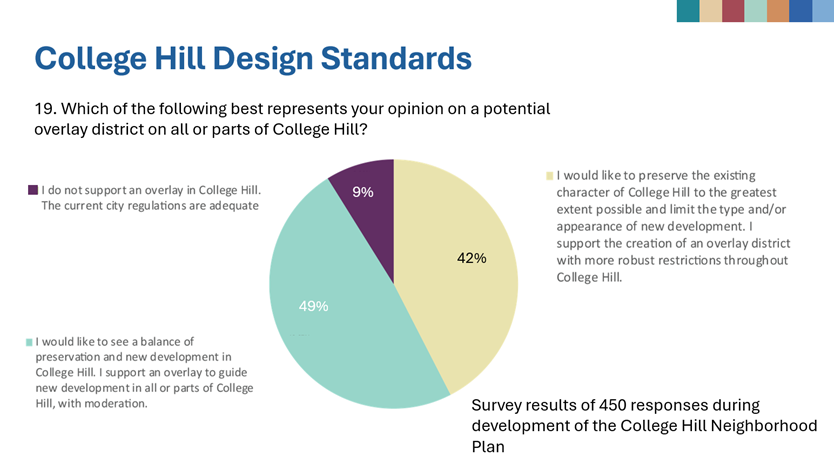
In Spring 2024, a community survey engaged residents and business owners to understand their priorities for the future of College Hill. In that survey, 91% of respondents indicated support for adoption of Design Standards. Nearly half (49%) of respondents indicated support of design standards for new development, with moderation. Another 42% expressed support for robust design standards that protect existing character to the highest level. Nine percent of respondents felt that the current city regulations are adequate.
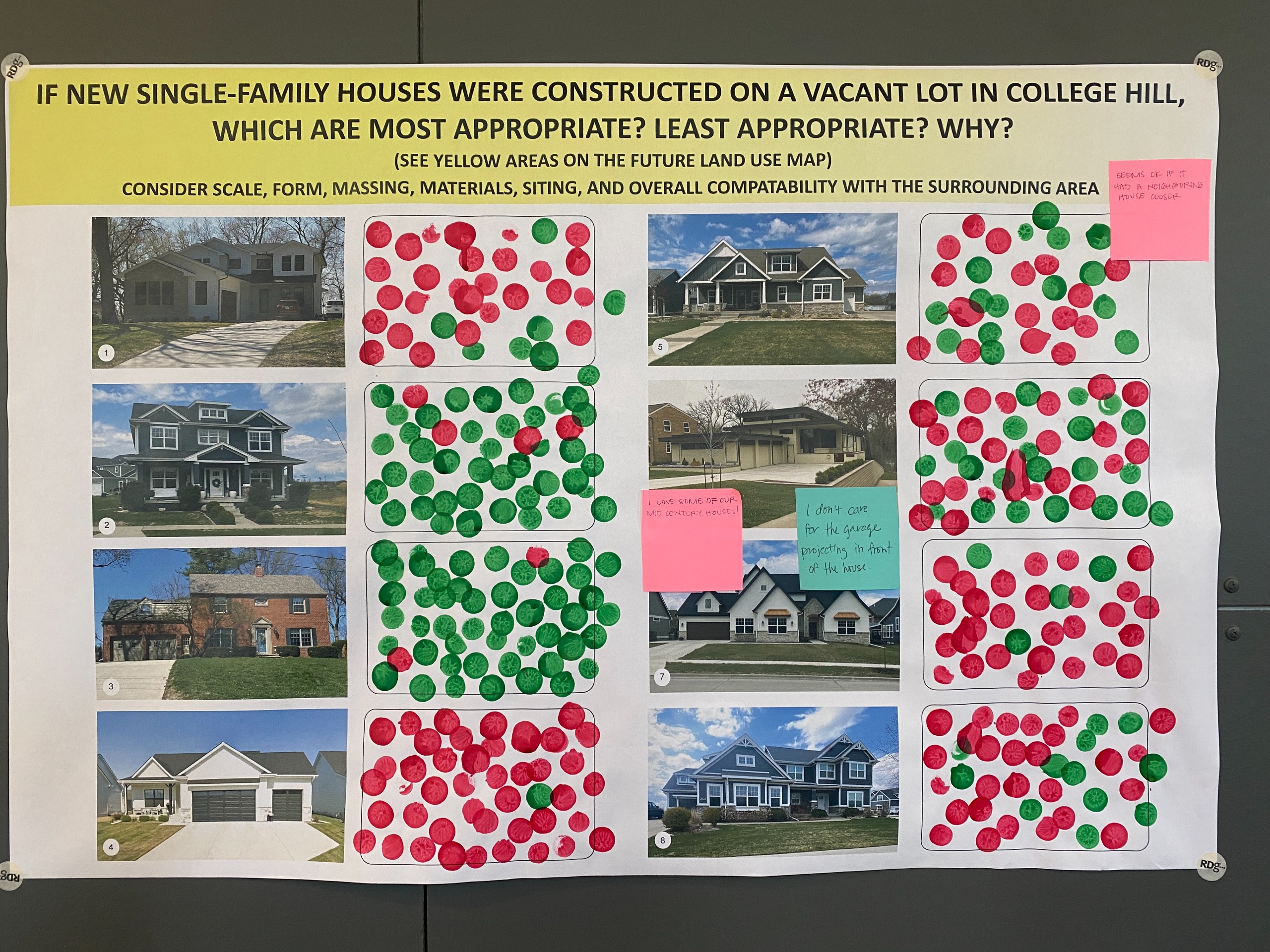
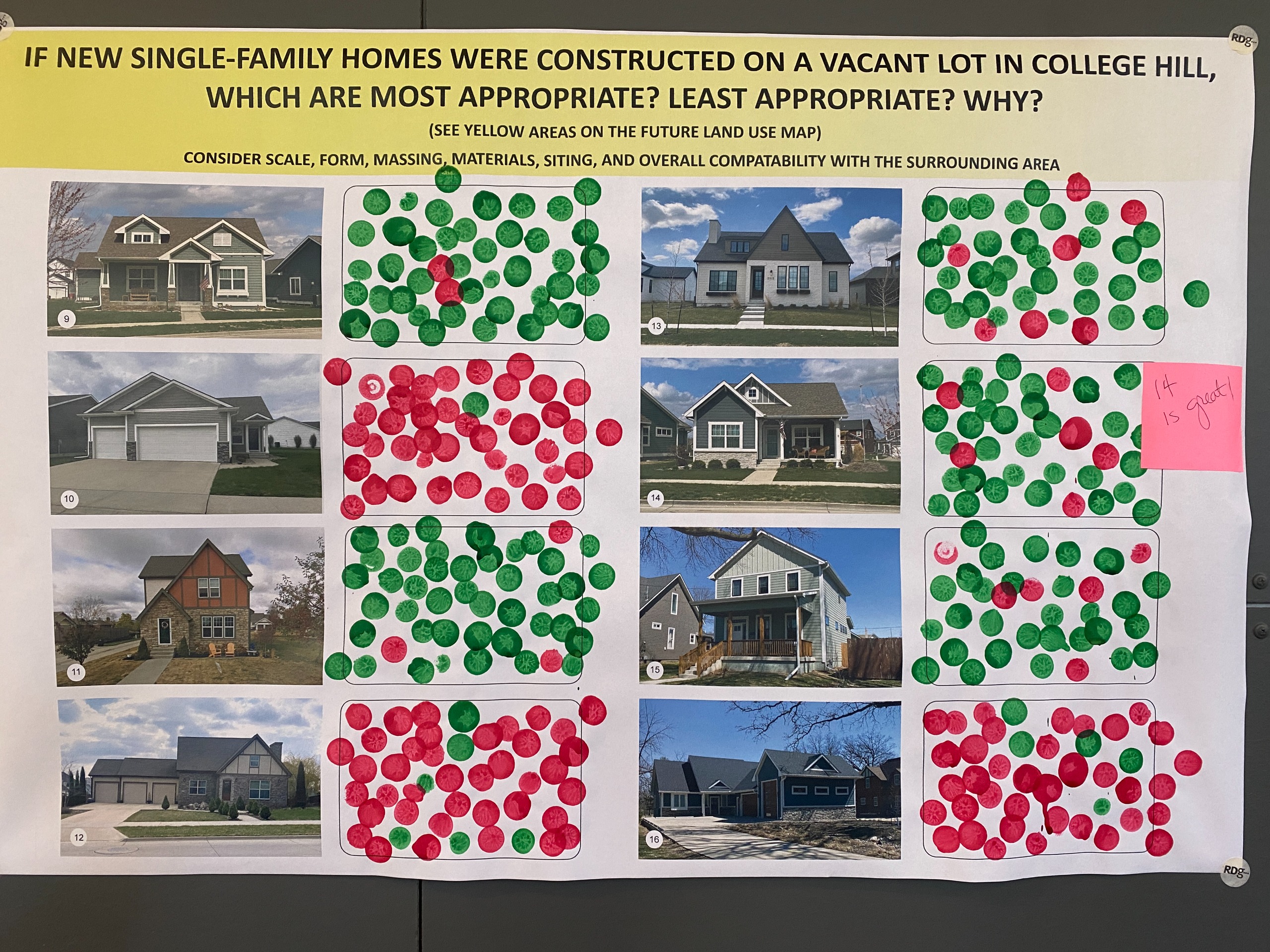
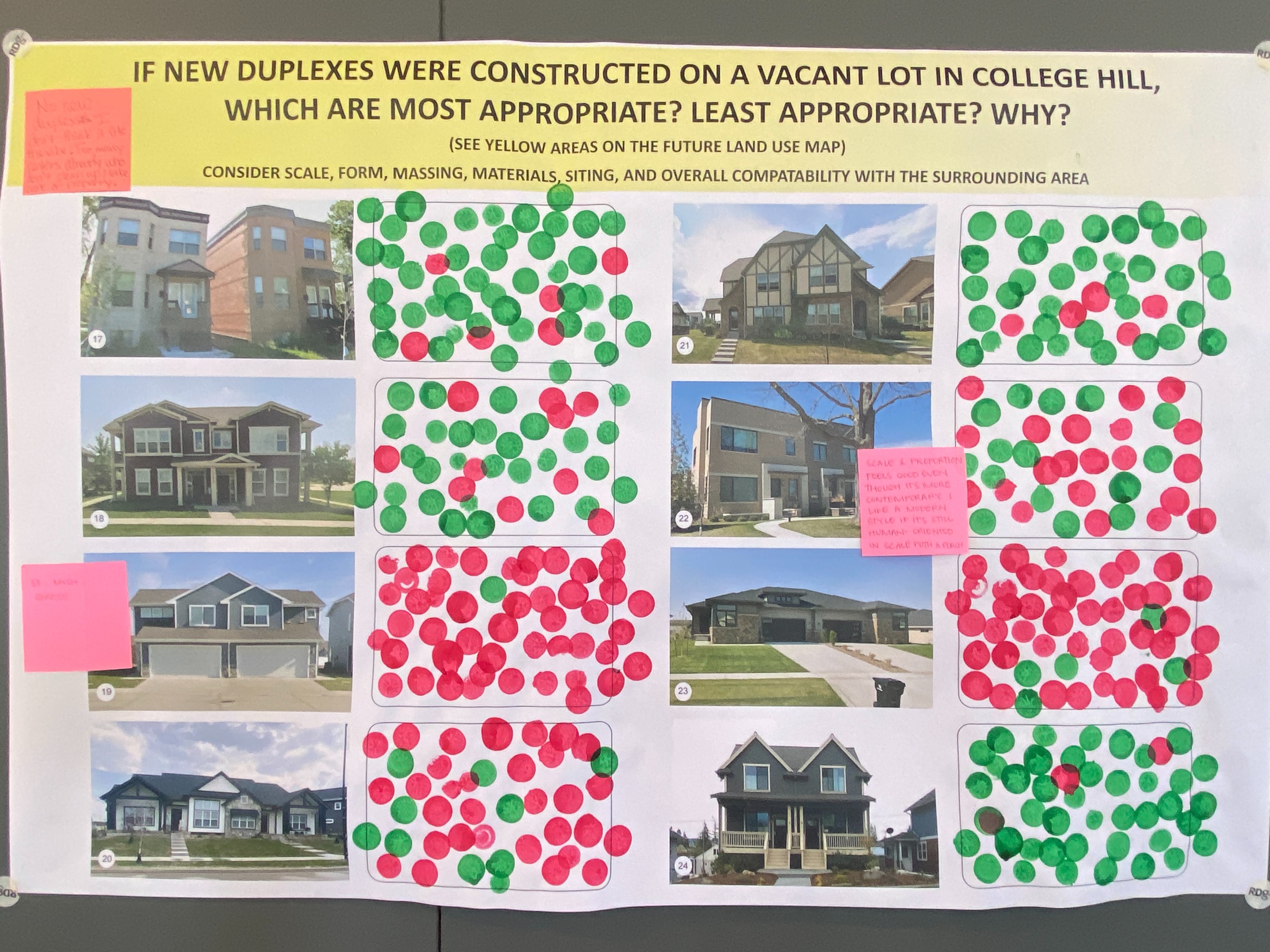
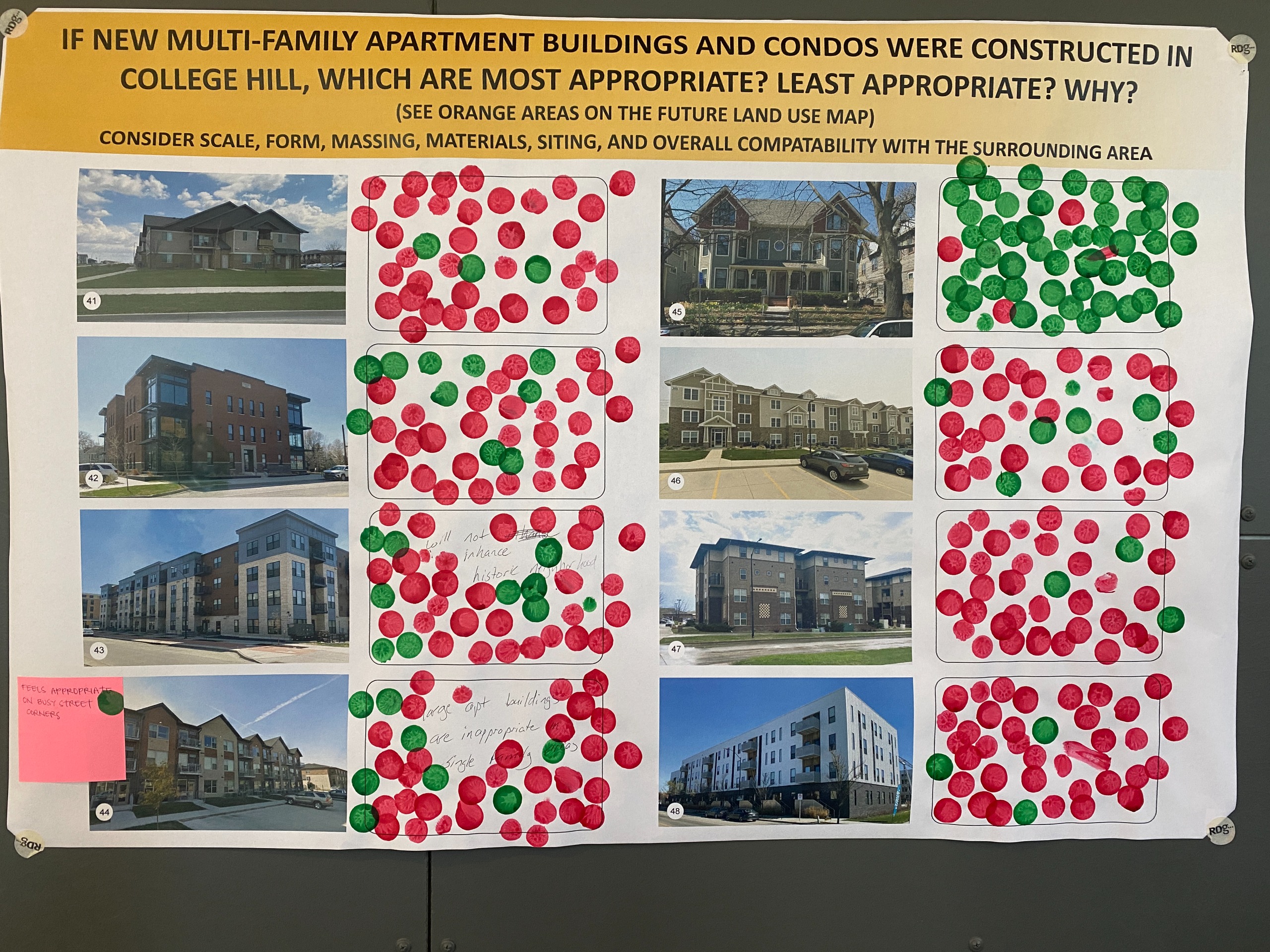
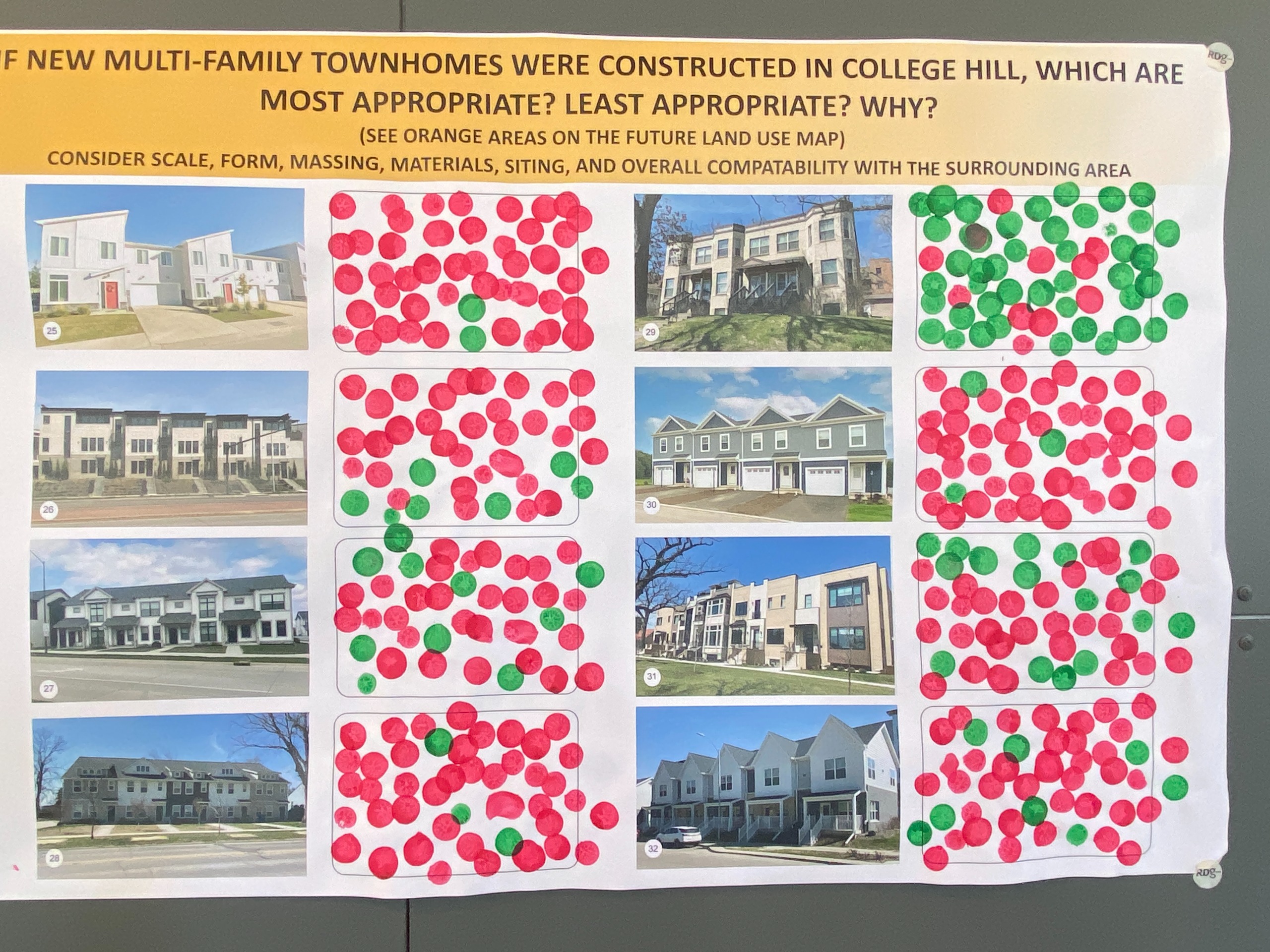
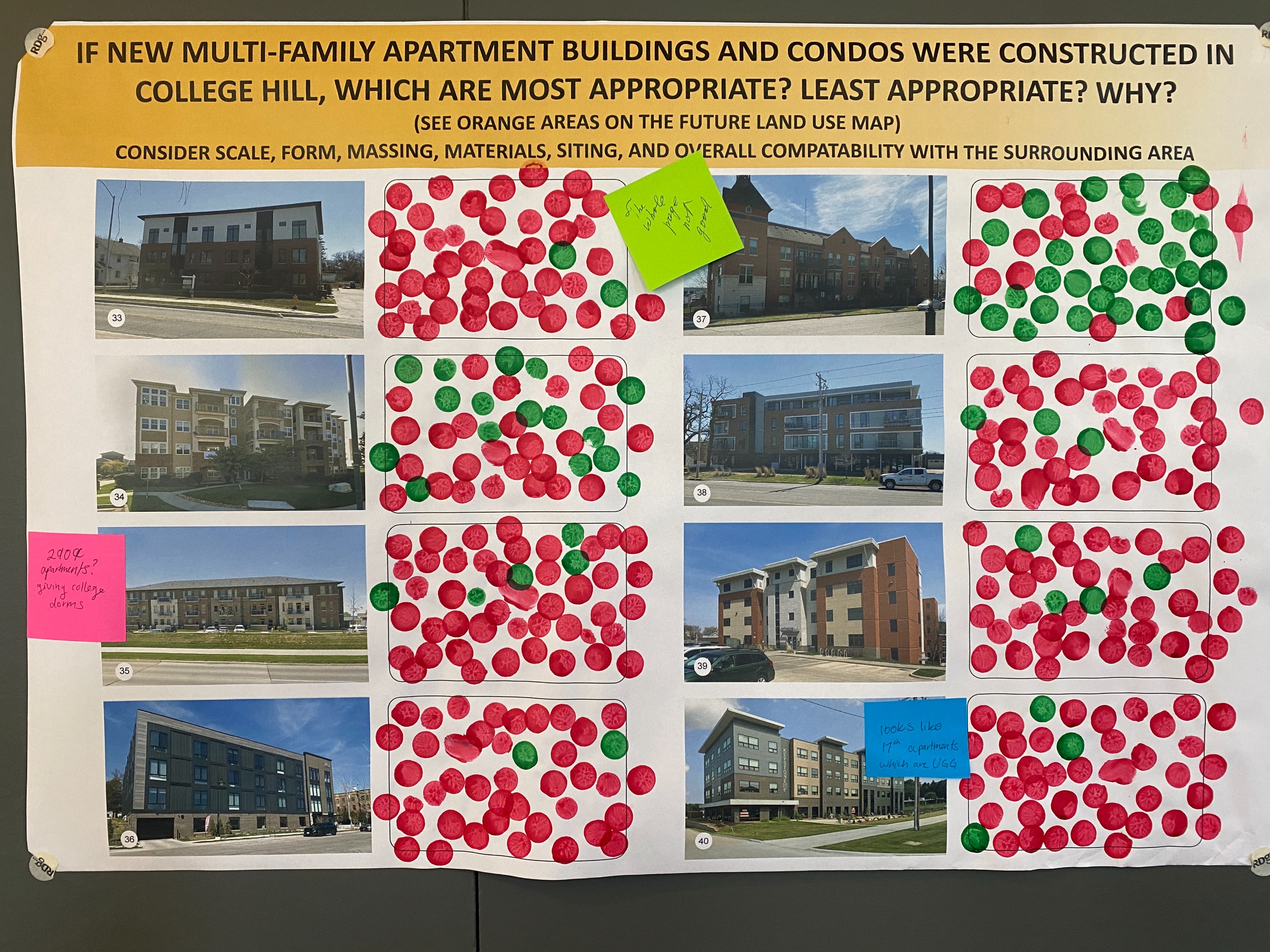
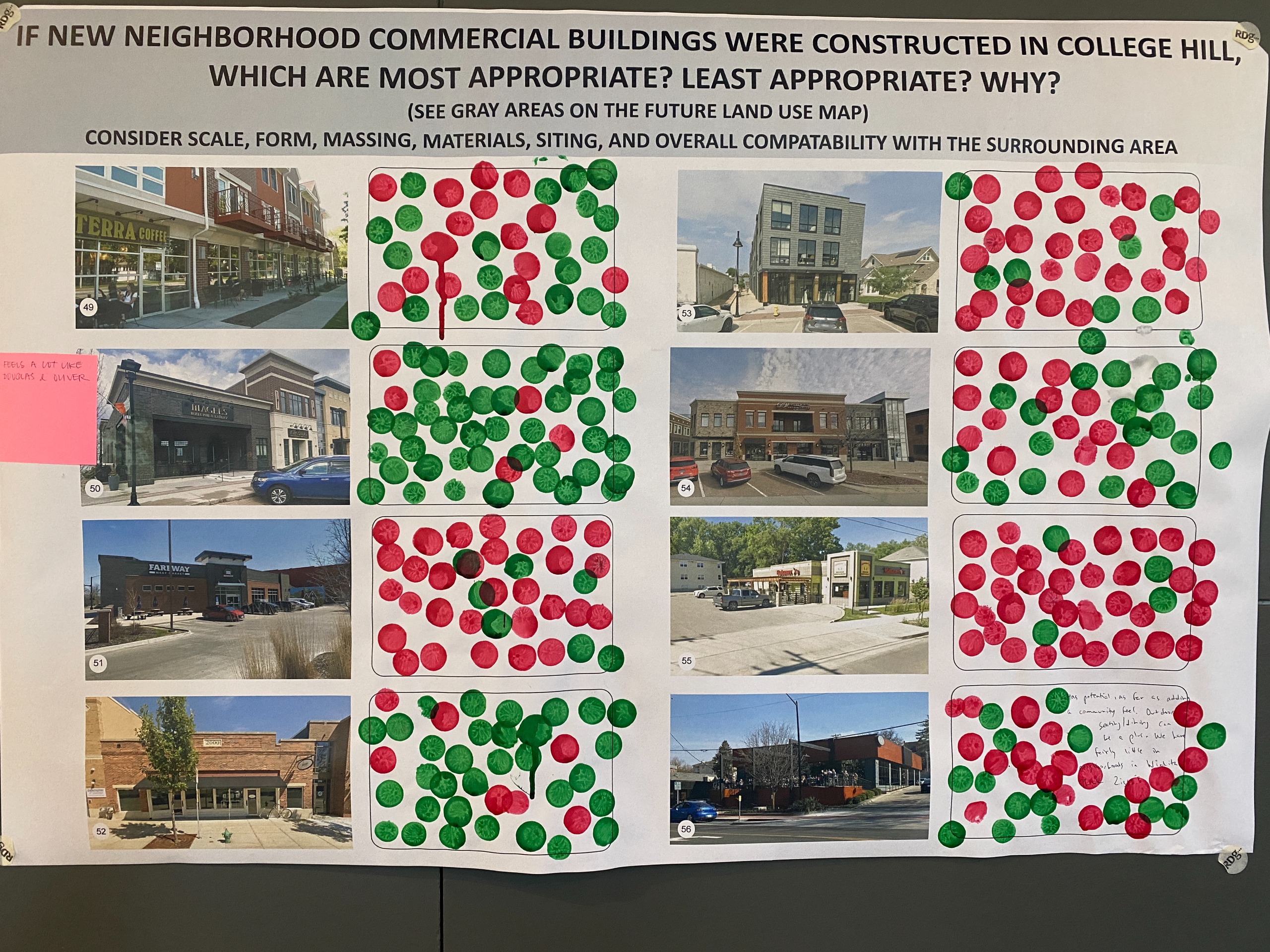
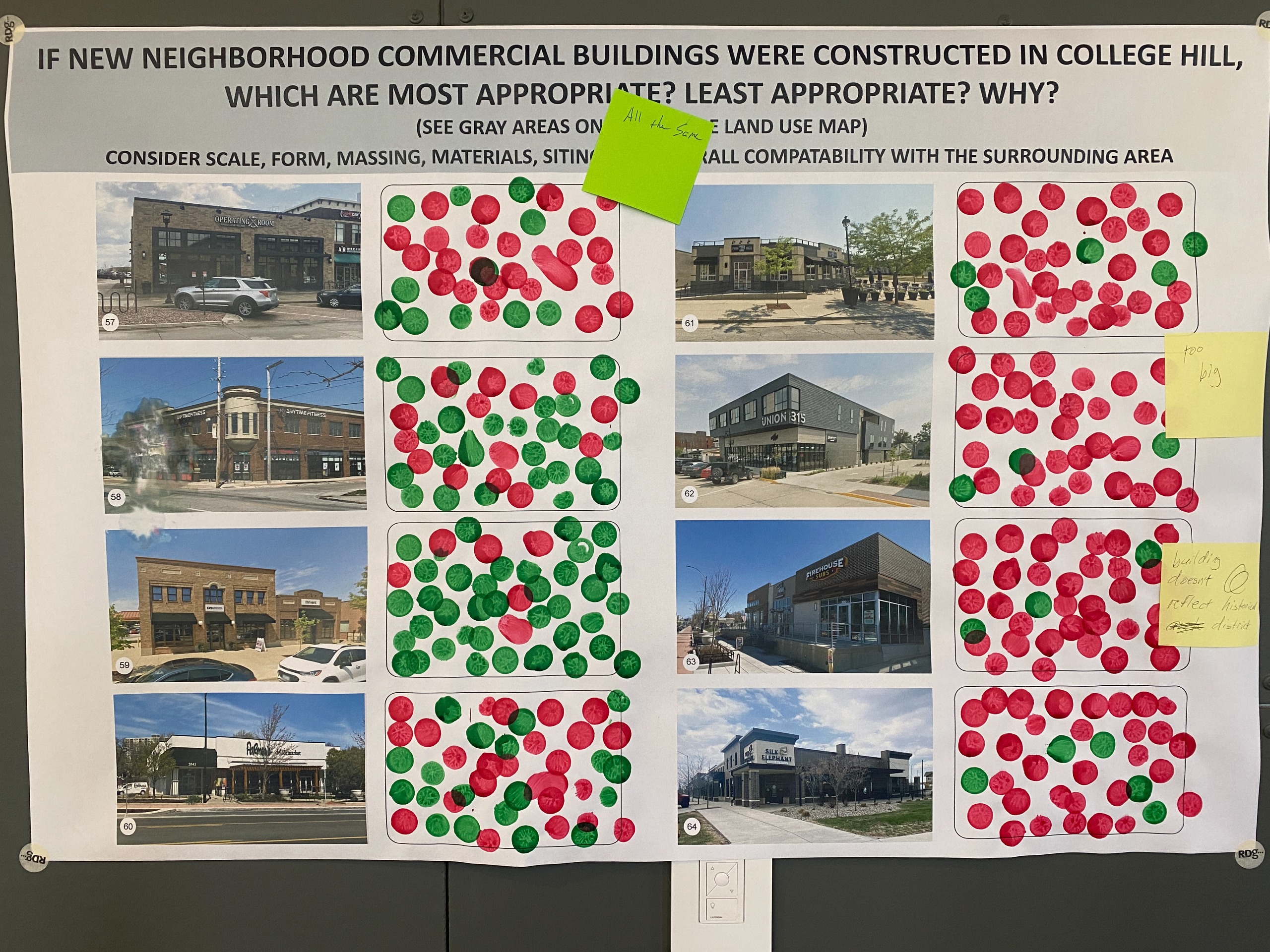
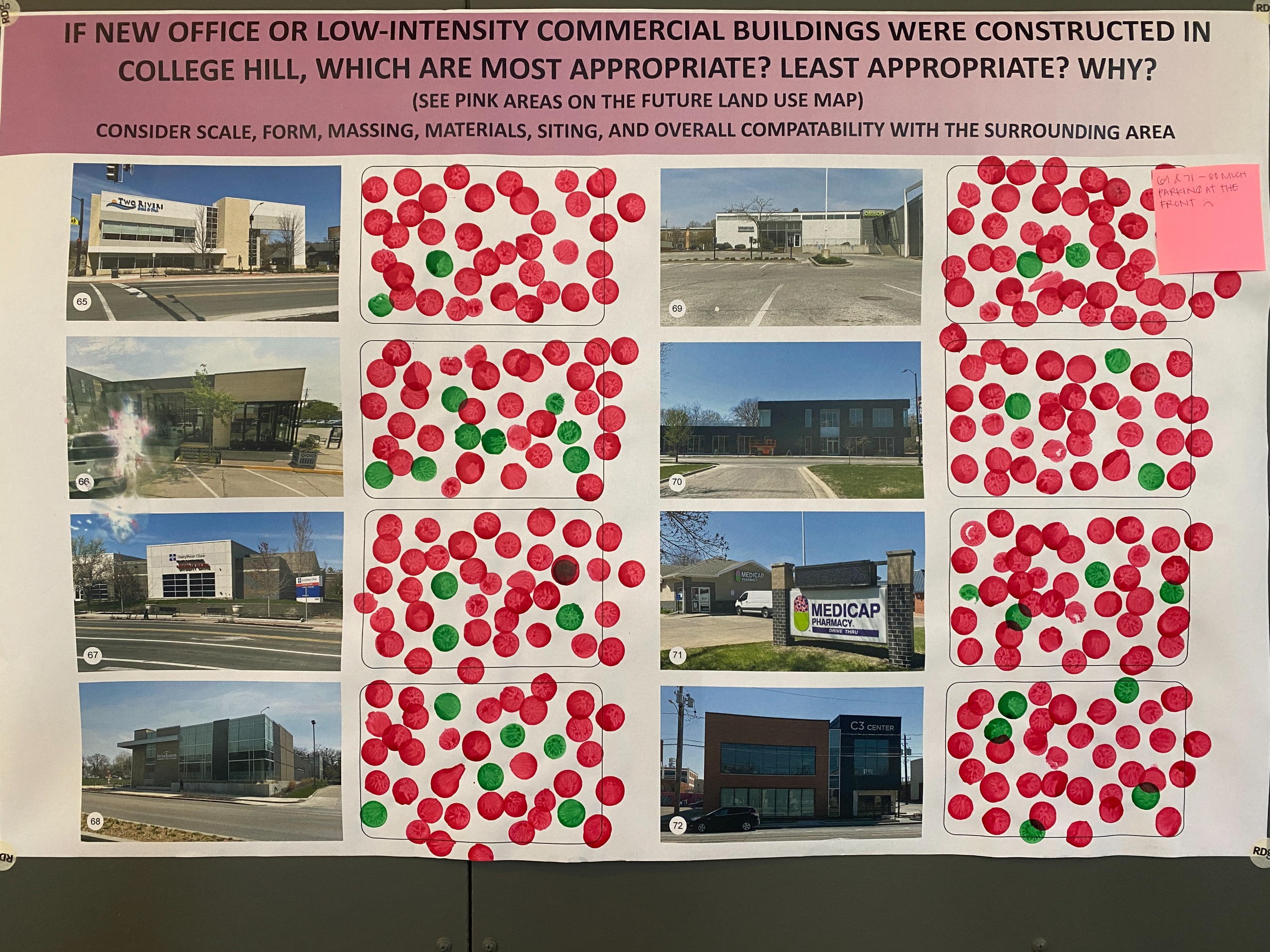
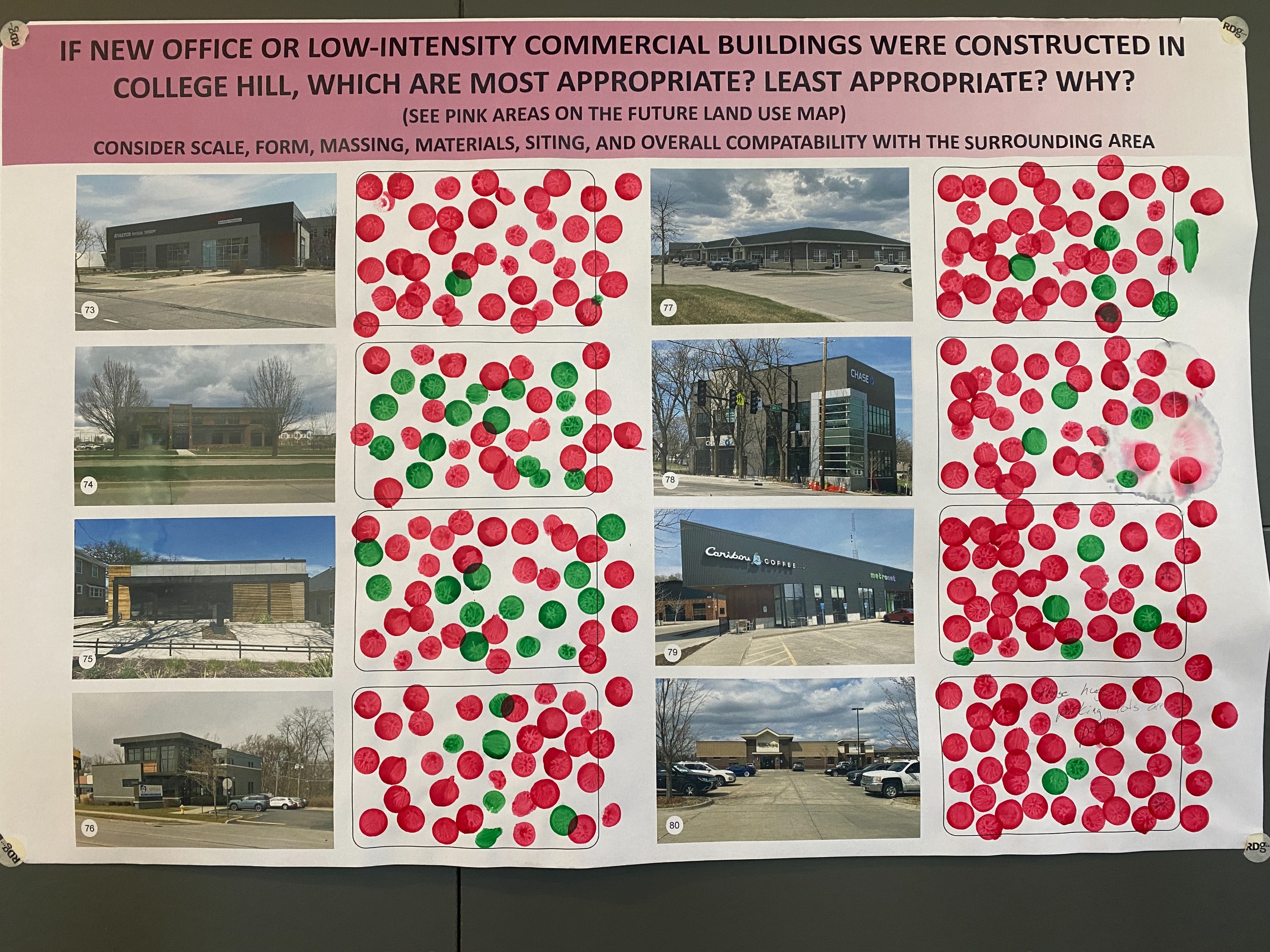
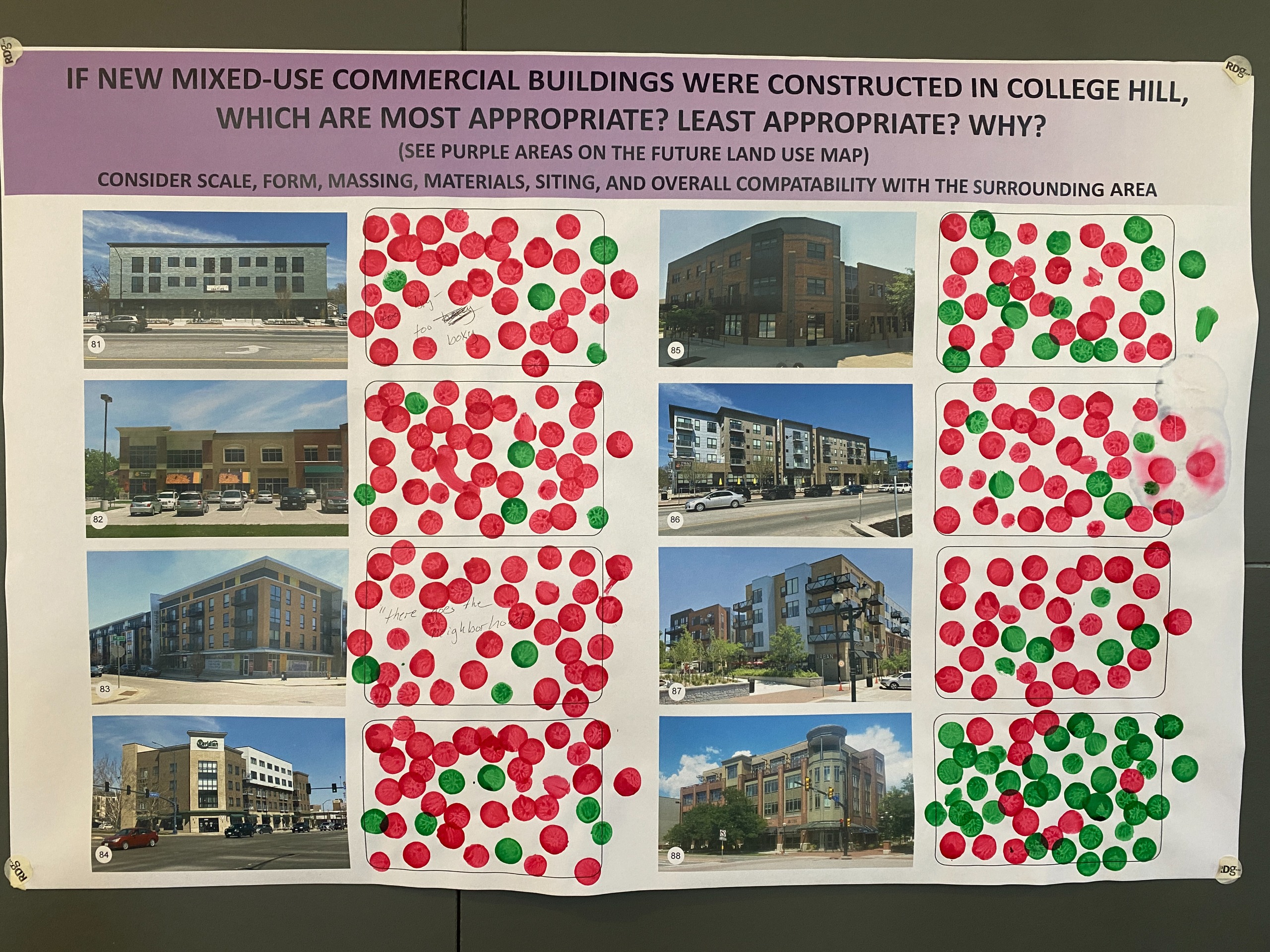
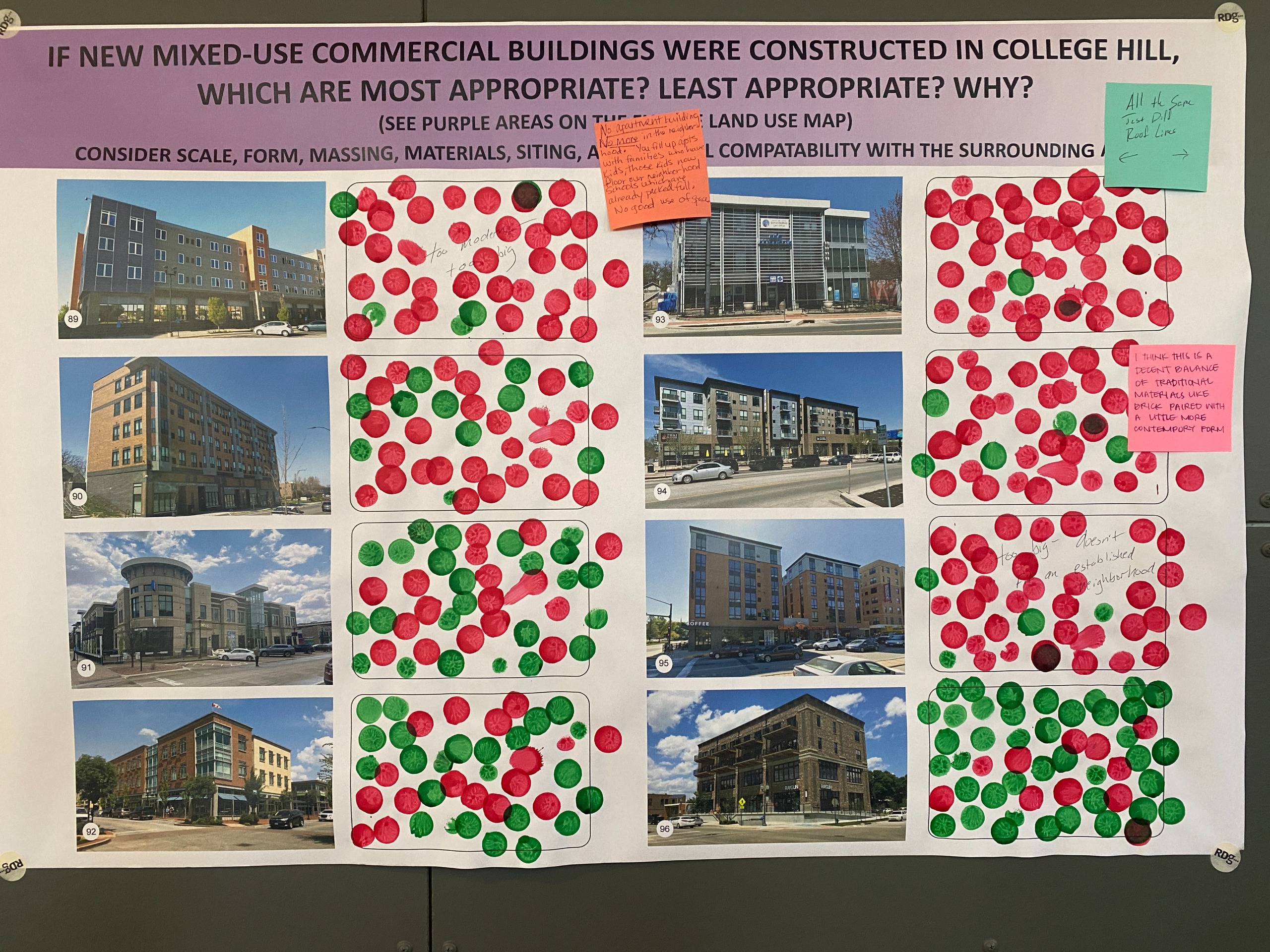
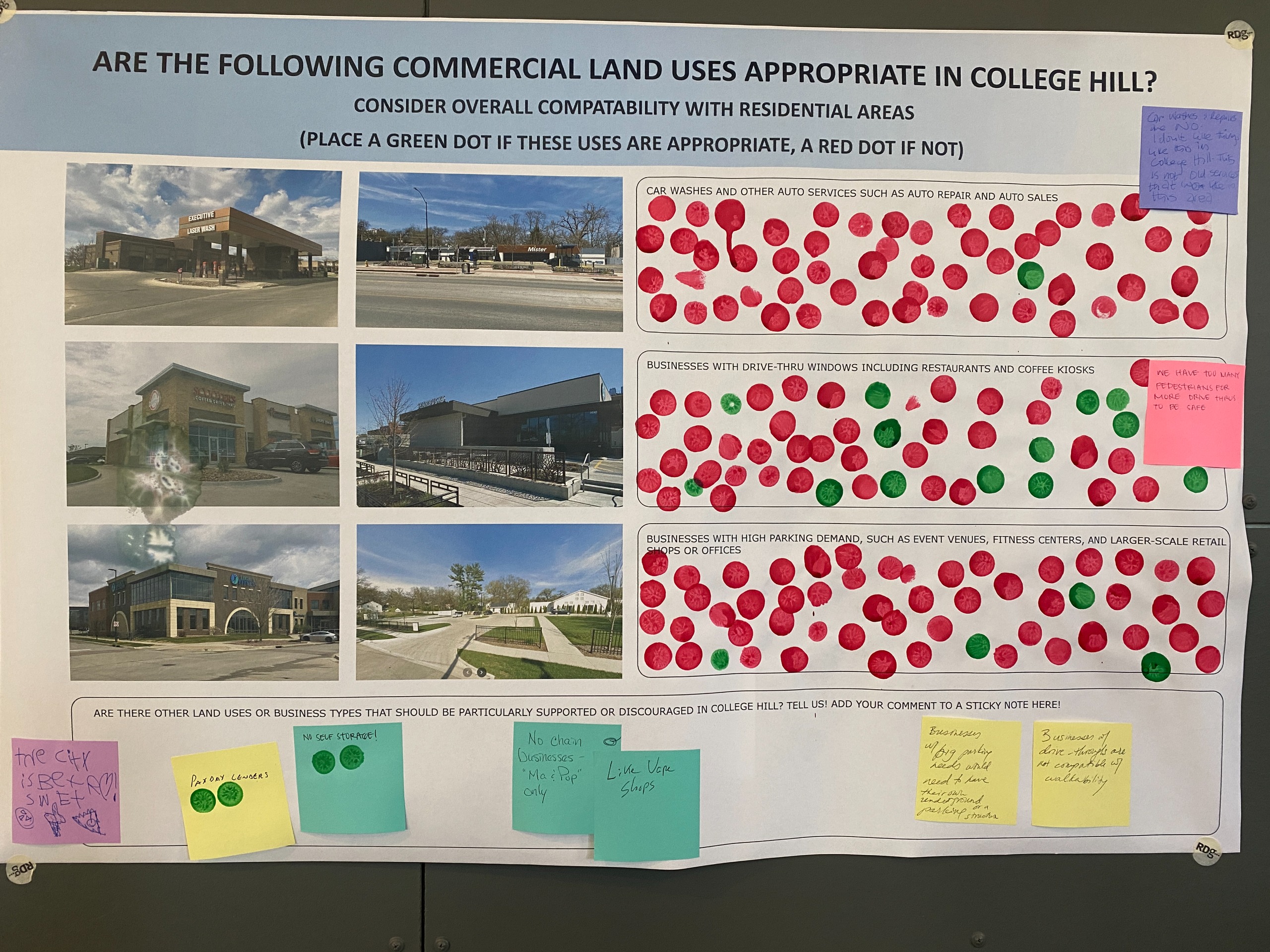
In Spring 2025, the City hosted a Public Open House to present the recommendations of the College Hill Neighborhood Plan. The Open House also launched the public input process for design standards. Attendees were asked to participate in a visual listening exercise by indicating whether different architectural styles were appropriate for College Hill. A green dot indicates “appropriate” and a red dot indicates “not appropriate”. Approximately 50 people participated in the exercise. Here are the results:
Image 1 of 14
Get Involved! Take the Survey!
This fall, City staff and the Steering Committee have continued to meet to discuss potential design standard recommendations.Now, we would like to collect YOUR input! What do you believe is appropriate to move forward for design standards? We have developed two surveys: one for residential design and another for commercial buildings. Each survey is expected to take approximately 15-20 minutes. Please note that you do not need to take both surveys in the same sitting.The deadline to complete the surveys is XX/XX/20XX at midnight.
Next Steps:
After collecting community feedback, the Steering Committee will evaluate your responses and make recommendations to City staff for further consideration.